Competing Civilizational Discourses in the Islamic Republic of Iran
Titre : Competing Civilizational Discourses in the Islamic Republic of Iran
Invité : Mehran Kamrava (Georgetown University Qatar)
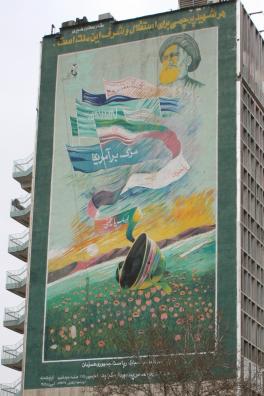
Résumé : Over the life of the Islamic Republic, three different discourses about the ideal shape of the Iranian civilization have emerged. In broad terms, these discourses can be categorized as religious conservative, religious reformist, and secular modernist. The religious conservative discourse can be most readily identified with the religio-political establishment that came to power after the revolution’s success. It seeks to explain the world, and more specifically its vision of the ideal social and political order, in terms that it claims most closely reflect the letter and the spirit of the arguments of the regime’s founder, Ayatollah Rohullah Khomeini. A second strand of thought has been similarly steeped in religious precepts and continues to see religion as a strong component of Iranian civilization. But it has a decidedly different conception of religion, seeking to reform and to constantly update rather than to reify the original religious tents of the 1978-79 revolution. There is a third civilizational discourse that has gained prominence among a growing number of Iranian thinkers of late—more accurately, it has regained the prominence it once had—and that is the secular modernist discourse. The modern world, this discourse’s proponents claim, is no place for politicized religion. It is, instead, a world in which religion needs to be privatized and politics needs to be secularized, where civil society and globalization must become the norm rather than the exception, and where democracy needs to reign supreme. While each of these discourses shape ideas and ideals about Iranian civilization among Iranian intellectuals, it is political dynamics that dictate the efficacy and pervasiveness of each in contemporary Iran.
Date, horaires : mercredi 16 septembre 2026, 14h00
Lieu : Salle de Sacy - Inalco, Maison de la Recherche (2, rue de Lille - Paris 7e)
Coordination de l'axe Proche et Moyen-Orient (WP6) : Laetitia Bucaille (Inalco), Gilles Dorronsoro (Université Paris 1 Panthéon-Sorbonne), Alia Gana (Université Paris 1 Panthéon-Sorbonne), Valentina Napolitano (IRD) et Rima Sleiman (Inalco) avec Jan-Markus Vömel, postdoctorant, programme DÉCRIPT.
Les échanges se dérouleront en anglais.
Les inscriptions sont ouvertes jusqu'au 14 septembre à 16h00 :