Cordée de la Réussite "Languages and Cultures of the World"
La Cordée de la Réussite "Langues et Cultures de l'Inalco" is a non-formal education program for secondary school students. A space for pedagogical experimentation with and between languages, supported by an approach in which reflection and knowledge mingle with creativity and freedom. The freedom to say, to do, and above all... to hold one's tongue.
An educational and cultural program through and between languages
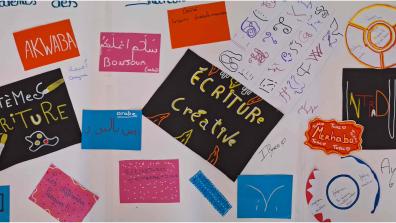
For the past three years, Inalco has been running an educational program for secondary school students, from the fourth to the final year of secondary school, as part of the national Cordées de la Réussite program. Called Langues et Cultures du Monde, the Cordée de l'Inalco offers a whole range of activities where languages and cultures rhyme with knowledge and discovery. Creative and multilingual workshops, surveys on migrant cultures, cultural visits and activities, meetings with researchers, linguistics and creative writing competitions, introductions to languages taught at Inalco... the aim of all these complementary activities is to put languages to work, to support secondary school students, particularly those in priority education zones and urban political neighborhoods, in their academic, personal and civic development. Students who often experience linguistic and cultural diversity on a daily basis, and to whom Inalco offers a space and an approach enabling them to explore this diversity critically, practically, and creatively.
Objectives of the Cordée "Languages and Cultures of the World"
- Enable students to discover their potential and develop their personal skills, particularly in languages, to boost their self-confidence and self-esteem. Make them aware of their ability to learn foreign languages, mastery of which is a determining factor in professional integration, and help them value their first and family languages, which are too often downplayed.
- Foster students' cultural and scientific openness, introduce them to the humanities and social sciences, contribute to the development of their critical thinking, and prepare them for further schooling and higher education.
- Foster students' personal expression, enable them to develop their imagination and assert their individual outlook, their subjectivity, within a group and as part of projects. Help students develop their self-confidence, their ability to say and do things with a critical and sensitive eye.
- Help students overcome certain barriers, notably psychological, cultural and spatial, that prevent them from projecting themselves into an imaginary world of academic and professional success, to enable them to build an ambitious career plan. Introduce them to careers and training related to foreign languages and cultures, as well as to the university environment and the expectations of higher education establishments.
.
Our news selection
La Cordée program and actions
La Cordée de l'Inalco is deployed through three types of action:
- Grouping highlights at Inalco, where a variety of activities are offered to roped-in students: language discovery workshops, cultural shows, lectures, discovering the university, meetings with students and researchers, career forums, participation in scientific or cultural meetings organized at Inalco.
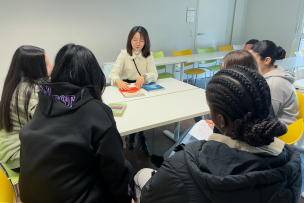
- Cycles of thematic workshops in small groups on a variety of themes (creative writing and plurilingual theater, investigation of migration or cultural heritage in migration, languages, linguistics and writing systems, shared cultures, etc.), organized throughout the year.), organized throughout the year in partner schools and complemented by cultural visits and encounters.
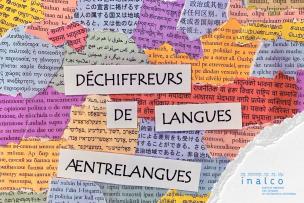
- Cross-curricular or school-specific actions, including the "Déchiffreurs de Langues" linguistics competition and the "Æntrelangues" creative writing competition, as well as specific actions designed to support students in their career planning.
Gathering highlights at Inalco
Welcome days are organized throughout the year at the Maison de la Recherche as well as at the Pôle des Langues et Civilisations. They provide an opportunity to bring together students from different establishments and introduce them to the Institute, its history, its courses and the career opportunities they offer, thereby opening the door to higher education. They are often extended by guided visits to a partner cultural establishment (Musée du Quai Branly, Institut du Monde Arabe, etc.), by introductory workshops in languages taught at Inalco, or by meetings with students, teachers or alumni.
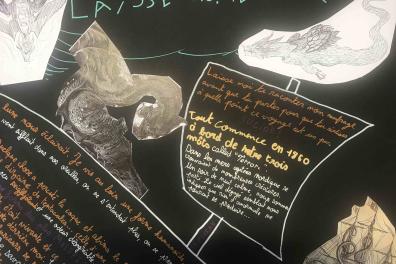
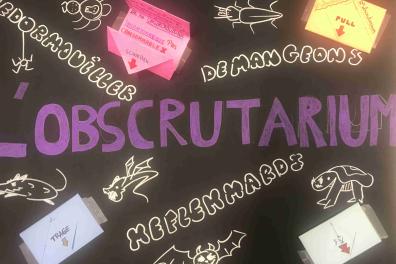
Closing days are organized at the beginning of June. The program includes cultural visits and workshops in the morning, as well as - and above all - a festive program of cultural and leisure activities in the afternoon, including a team game for secondary school students. The closing ceremony is also designed as a time for feedback: an opportunity for students, especially high-school pupils, to share with their peers what they have been doing and discovering throughout the year. Poster displays, small exhibitions, oral presentations and other creative restitutions punctuate the day.
Linguistic, reflective and creative workshop cycles
Our pedagogical approach
The La Cordées method and approach are inspired by so-called "non-formal" pedagogies and are embodied in a variety of proposals, where discovery and reflection are accompanied by a sensitive, practical and creative approach. The activities on offer have one thing in common: they are designed to help all students succeed. The idea is not to teach students knowledge, but to enable them to make discoveries by themselves, to make them aware of their ability to learn and understand independently. Group work will have its rightful place in these resolutely lively and playful workshops.
Audience and organization
Our workshops are designed for small groups of 8 to 14 student volunteers, to encourage students to speak out and to ensure quality exchanges and listening. No prerequisites or prior knowledge are expected, as la cordée is open to all students, regardless of their academic performance. The only thing that counts is their motivation. We also have speakers who can offer workshops for UPE2A students. While the general spirit remains the same, the emphasis for this group is often on the practice of French as a foreign language.
Our workshops generally take place in partner establishments throughout the year, but we also offer "workshop" formats, outside the school walls (in Paris or at Inalco) during the February and April school vacations. La Cordée thus offers registered students, who take part independently (i.e. without their teachers), a program of visits and workshops that provides a time for breathing and discovery.
Presentation of thematic cycles
The cycles offered as part of La Cordée, lasting around ten to twenty hours, enable visitors to explore unknown languages and writing, to practice the power of the plurilingual verb, both written and spoken, to explore the intricacies of linguistics, or to conduct a little fieldwork. Here, as elsewhere, the emphasis is on decentering, and on linguistic and cultural spaces that are too often neglected in secondary education.
The presentations below (unfold them by clicking on the arrow next to each summary)are brief and open-ended, weaving directions but not directives: the actual content of the cycles depends on the audience, the investment of the teacher-referent, and finally the skills and ideas of the speaker. We therefore build a tailor-made proposal for each roped-off group, in line with La Cordée's objectives and our own pedagogical approach. Quite often, we'll mix and match teaching proposals from several cycles, working together to trace the coherence and progression.
"Discovering World Languages"
This cycle offers students the opportunity to question what languages are in all their diversity, to grasp major basic principles of linguistics, and to discover variation at work in language and writing.
"Discovering World Languages"
This cycle offers students the opportunity to question what languages are in all their diversity, to grasp major basic principles of linguistics, and to discover variation at work in language and writing.
A cycle to question the triptych language-language-dialect, to discover some major principles of linguistics and better apprehend the diversity of the world's languages and their scripts. From language identities to language families and borrowings, from the history of writing to the history of numbers,
these are just some of the opportunities and topics to question our relationship with our own languages and representations. With, through a look at so-called "rare" languages, the desire to encourage decentering and curiosity in students.
"Plurilingual & Oral Theatre"
Use the body and voice to bring to life all the languages that inhabit us, that tug at us, that call us or question us. A cycle of workshops where words, languages, objects and texts can take shape and tell their own stories.
"Plurilingual & Oral Theatre"
Use the body and voice to bring to life all the languages that inhabit us, that tug at us, that call us or question us. A cycle of workshops where words, languages, objects and texts can take shape and tell their own stories.
A course focusing on theater activities in an intercultural and multilingual dimension. The cultural and linguistic baggage of the students will be both the starting point and the major asset of these workshops, which will leave plenty of room for the body, improvisation and personal expression.
Work on orality, storytelling and its variations, will be able to accompany the theatrical part of the workshop, and introduce students to texts and writing through another door. Other activities, based on music or the sound of languages, could complete the proposal.
"Multilingual Creative Writing"
Writing to play with words, to make foreign and imaginary languages resonate, until your voice is set free: this is the programme of this resolutely creative cycle, where writing becomes a vehicle for the imagination, travel and linguistic otherness.
"Multilingual Creative Writing"
Writing to play with words, to make foreign and imaginary languages resonate, until your voice is set free: this is the programme of this resolutely creative cycle, where writing becomes a vehicle for the imagination, travel and linguistic otherness.
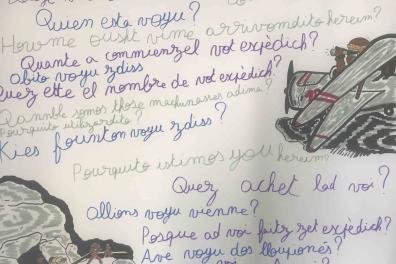
Place for creativity, narrative and poetic exploration of foreign languages through writing. It's an opportunity to start thinking about the linguistic norm, and to break away from it to approach the shores of writing where French blends with other languages and scripts. Times for reading aloud punctuate this workshop, and the productions produced, which vary according to the duration of the workshop, will be promoted at the end of the project (display, exhibition, mini collection, etc.).
Translation workshops, meetings with writers or translators, or participation in a public event (small festival, evening of readings, event at Inalco) may be considered. Participants in this workshop cycle will be supported in their participation in the "Æntrelangues" writing competition.
"Languages, Heritage and Migration"
Thinking about the migration of people, objects and cultural practices, questioning one's own journey, then setting off to interview people who have experienced migration and report on it: a real introduction to field investigation.
"Languages, Heritage and Migration"
Thinking about the migration of people, objects and cultural practices, questioning one's own journey, then setting off to interview people who have experienced migration and report on it: a real introduction to field investigation.
This demanding course is designed for highly motivated students accompanied by a mentor teacher. It will lead them to question the relationship between migration and heritage. What is heritage? What are the dynamics at work in the phenomenon of patrimonialization? What do people keep, what do they give up and what do they pass on from their culture of origin when they migrate? How do cultures change and mix in the process, and what identities are born of this intermingling? These and many other questions will be explored in depth.
Visits and meetings (with the Musée de l'Immigration, UNESCO, journalists and researchers) will provide students with food for thought before they conduct their own research in the field. The second part of this workshop cycle is devoted to a biographical investigation, which the students are free to carry out creatively. Note that the theme of this cycle overlaps with the HG-SP specialty program, and that it is possible, for students wishing to do so, to make it the subject of one of the questions presented afterwards at the grand oral.
"World Tour of Languages and Cultures"
A journey around the world to discover languages and cultures unknown to students. Stopovers that will be as many opportunities to discover linguistic systems, scripts and cultures little known to students.
"World Tour of Languages and Cultures"
A journey around the world to discover languages and cultures unknown to students. Stopovers that will be as many opportunities to discover linguistic systems, scripts and cultures little known to students.
Following on from the "Discovery of World Languages" cycle, this time this cycle offers students the chance to zoom in on languages and cultures taught at Inalco. Two or three sessions on a first language, then two or three more on a second (and possibly a third afterwards), to discover different linguistic systems, writing systems and cultures. Examples of possible pairs: Japanese/quechua, Arabic/hungarian, Korean/swahili, Arabic/yiddish, in other words languages of different status and/or belonging to different cultural and linguistic areas.
The choice of language pair offered is at our discretion at Inalco, depending on the skills and availability of the teams of animators. Cultural visits and meetings related to the languages and cultures discovered will be proposed, to reinforce the coherence of our proposal.
"Journey to the Kingdom of Scripture"
A resolutely practical and graphic cycle, where the hands work as hard as the head, where we'll discover that writing was born under the traits of drawings, that variation has long been its norm, and that this invention has a long history...
"Journey to the Kingdom of Scripture"
A resolutely practical and graphic cycle, where the hands work as hard as the head, where we'll discover that writing was born under the traits of drawings, that variation has long been its norm, and that this invention has a long history...
From the visual and pictogrammic origins of writing to its gradual evolution towards non-figuration, from the alphabet to ideograms via syllabaries, from Dongba writing to runes without forgetting Mayan glyphs, we'll go in all directions, from left to right or top to bottom, to better understand the underside of this invention, so central to our societies and yet so recent on the scale of human history.
Visits to cultural institutions where writing in all its forms occupies an important place (Musée Guimet or Musée de la BNF), inquiry-deciphering activities in libraries or halls, or introductory translation workshops will spice up this cycle of workshops. And why not combine a calligraphy workshop with the invention of a new writing system?
"Languages and Cultures in Dialogue""
A cycle at the crossroads of Arabic and Hebrew languages and cultures, to discover that what sometimes seems to set us apart can also bring us together, and that "nothing is created, nothing is lost, everything circulates", from one language to another, from one culture to another.
"Languages and Cultures in Dialogue""
A cycle at the crossroads of Arabic and Hebrew languages and cultures, to discover that what sometimes seems to set us apart can also bring us together, and that "nothing is created, nothing is lost, everything circulates", from one language to another, from one culture to another.
This tour will explore both the shores of language, through cross-cultural introductory workshops in Arabic and Hebrew, and those of culture, of cultures, through the Cultures en Partage program run by the Institut du monde arabe and the Musée d'art et d'histoire du judaïsme. These two institutions offer guided tours focusing on the relationships, transfers and commonalities between Arab and Jewish cultures, as well as between the different monotheistic religions.
This cycle, always with a serious, creative and playful approach, will also enable discoveries in the field of linguistics, writing systems and dialects. Bridges can also be built to neighboring languages: Yiddish and Germanic dialects, Swahili, Berber and Persian. So many opportunities to tackle the question of cultural and linguistic transfers, to work on the notion of borders, and to question the compartmentalization of foreign languages and cultures.
"Les Déchiffreurs de Langues": an educational linguistics competition
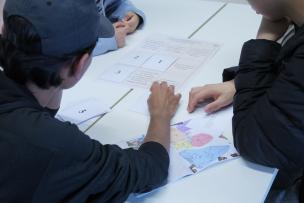
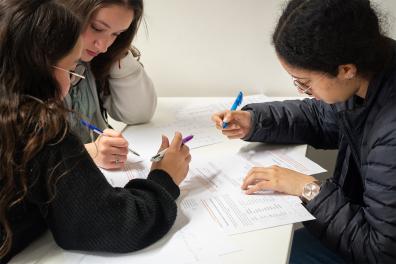
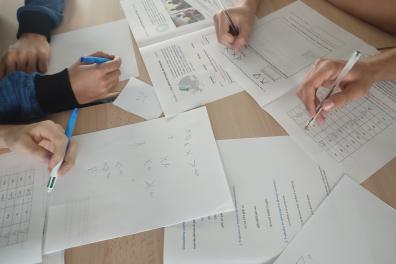
Destined for high school students, the "Déchiffreurs de Langues" competition is designed to enable the discovery of unknown language facts and linguistic systems. Inspired by the Olympiad of Linguistics, the aim is to deduce linguistic facts, grammatical rules or even the workings of an unknown script, by observing short corpora in teams and using logic.
The way in which the topics are thought out (progressive difficulty of questions, clues to which students may or may not have recourse) gives it a pedagogical dimension: all participants should be able to find a certain number of answers on their own, and be amazed at the discoveries they will have made by relying on their thinking and collaborative skills.
The competition is organized in two stages: an initial test during Semaine Nationale des Cordées, on Tuesday February 3, which selects a number of teams per school for the final, which takes place during Semaine des Langues (March 2026). The winners - at least one team per school - are invited to Inalco for the awards ceremony on the morning of May 6, 2026, which will also be a time of discovery and sharing about linguistic diversity.
To find out more and register your school, visit the page dedicated to the Déchiffreurs de Langues Competition.

"Æntrelangues": a multilingual creative writing competition
The "Æntrelangues" competition is a multilingual creative writing contest open to all French-speaking middle and high school students. The aim of the competition is to highlight the diversity of languages that resonate in secondary school classrooms, whether they are called "original", "dialectal" or "small", whether they are well known or literally imaginary...
This plurilingual dimension is the main feature of the competition: the texts will be written in French, but blended, mixed, associated with other languages, in a thousand and one ways. Through the freedom taken in writing and the interplay of languages, this competition aims to give pupils confidence, and enable them to enhance their creativity and showcase their linguistic baggage.
A rich and detailed teaching pack will be sent to registered schools so they can roll out the competition and get their pupils to write in a plurilingual approach. This will include not only varied activities to raise students' awareness of plurilingualism and the diversity of world languages and French, but also turnkey writing proposals, which the competition referents will be able to appropriate.
Competition timetable:registration for the competition is open from September 15 to December 20, 2026, and texts selected for submission to the competition must be returned to Inalco by March 20. Competition results will be sent to participating schools in mid-April. The awards ceremony will take place at Inalco on May 7, 2026.
To find out more and register your school, consult the page dedicated to the Æntrelangues Competition.
Discovering university, research and careers
Meeting with students and alumni
During grouping days, or during specific meetings organized at Inalco, we will endeavor to enable high school students to ask their questions about orientation, studying in higher education, the courses and opportunities that Inalco can offer, and humanities studies at university more generally. We'll be doing all we can to give high-school students, especially those in their final year, the chance to meet Inalco graduates: by sharing their professional and personal experiences, they'll be able to show students that a career and professional orientation are also built through encounters and opportunities. And that with a good university education, it's possible to learn new skills in the field... A way, finally, of inviting students to imagine careers that are open to foreign and international horizons.
Actions to support career guidance
As part of La Cordée, we are offering all high schools the opportunity to have students speak at the career guidance days they organize, giving all students in these establishments, and not just roped-in students, the chance to discover Inalco and its courses. Through our intervention, we will also raise students' awareness of the requirements and methods of studying languages and humanities at university: indeed, their lack of understanding all too often puts new first-year students in difficulty.
Specific support, based on voluntary participation, will be offered to roped high school students during the "Portes Ouvertes" organized by Inalco at the beginning of 2025, in order to best support their orientation project.
Experimentarium program
Initiated at the University of Burgundy, the Experimentarium program will enable roped-up students, both middle and high school, to meet Inalco doctoral students. The aim, in terms of cultural openness and critical thinking, is both to raise students' awareness of what university research is all about, the production of scientific discourse and truth, and to awaken their interest in often little-known humanities disciplines.
PhD students will undergo specific training to enable them to share their research topics in a fun and interactive way, and make science accessible and captivating for all. The workshops on offer are thus designed to be studious but also engaging and dynamic.
Partner establishments in 2025-2026
In 2025-2026, around 600 secondary school students, from twenty-one establishments located in three académies (Ile-de-France, Nouvelle Aquitaine and Orléans-Tours), will take part in the Cordée supported by Inalco.
Find here the interactive map with all our partner establishments for the year 2025-2026.
In Île-de-France
In Île-de-France
- Collège Gabriel Faure, Paris 13
- Collège Georges Braque, Neuilly sur Marne
- Collège Georges Rouault, Paris 19
- Collège Gisèle Halimi, Aubervilliers
- Collège Guy Moquet, Gennevilliers
- Collège Claude Debussy, Aulnay-sous-Bois
- Lycée général et technologique Condorcet, Limay
- Lycée général et technologique Henri Wallon, Aubervilliers
- Lycée polyvalent Galilée, Gennevilliers
- Lycée polyvalent Johannes Gutenberg, Créteil
- Lycée général et technologique Le Corbusier, Aubervilliers
- Lycée général et technologique Les Sept Mares, Maurepas
- Lycée polyvalent Louise Michel, Epinay-sur-Seine
- Lycée polyvalent Marx Dormoy, Champigny-sur-Marne
- Lycée polyvalent Nicolas-Joseph Cugnot, Neuilly-sur-Marne
In Eure-et-Loir
In Eure-et-Loir
- Lycée général et technologique Rémi Belleau, Nogent-le-Rotrou
- Collège Pierre Brossolette, Nogent-le-Rotrou
In New Aquitaine
In New Aquitaine
- Lycée général et technologique Camille Jullian, Bordeaux
- Lycée polyvalent Gisèle Halimi, Bazas
- Lycée général et technologique Jean Condorcet, Bordeaux
- Lycée Nicolas Brémontier, Bordeaux
Organize workshops or training courses in partnership with Inalco
You're a teacher or school manager (school, college or high school, university...), you work in a cultural center, a youth center or cultural establishment, an association or a foundation? You've heard about our pedagogical proposal and our approach, and you'd like to ask us to intervene directly with your audience or organize a training session for your teams?
We invite you to write to us, outlining your project, so that together we can build an action program that's as close as possible to your needs and wishes. As far as schools are concerned, we plan to register Inalco on the PassCulture scheme at the start of the 2024-2025 school year. Our activities will then be bookable directly through the Adage platform.
The Cordée de l'Inalco teaching team
Program coordinator
Professional in associative socio-cultural animation, editor, translator and writing workshop facilitator, Florian Targa is a graduate of Inalco in Arabic and literary translation. Passionate about knowledge mediation in all its forms, he is particularly interested in multilingual creative writing and heritage investigation workshops.... In addition to leading workshops in the field and acting as a resource person in his own right, he is in charge of managing, promoting and steering the program as a whole.
Pedagogical references
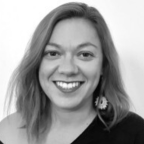
Actor and mediator in the field of languages and theater, Albane Molinier works at Inalco as part of the Licence+ program. Armed with an anthropologist's eye, her curiosity about peoples and languages has led her to explore the world from the Americas to Oceania, learn Bislama (a Creole from Vanuatu), work with Amerindian communities and practice various forms of performing arts. In particular, she is a referent for multilingual theater workshops, as well as for workshops aimed at allophone UPE2A students.
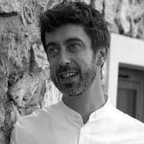
Sylvain Audet, translator, writer and speaker of Romanian, is also a teacher of French as a foreign language (FLE). At INALCO, he leads Anatomie d'une langue et d'une culture workshops and plurilingual writing workshops as part of Licence+ and Tempo. This year, as part of the Cordées de la réussite, he will be overseeing the implementation of the Experimentarium program, which trains PhD students to share their research in a fun and accessible way with high school students.
Workshop facilitators and other occasional contributors
The La Cordée team is complemented in the field by facilitators with varied profiles and backgrounds. Some are mediation professionals, others are students with a passion for transmission and their studies. All have undergone specific in-house training and are supported throughout the year. Teacher-researchers, doctoral students, alumni administrative staff, students, members of associations and other external contributors complete the La Cordée team from time to time as the project progresses.