DESCRIPTION in dialogue | Whose Peace? Warmongers, peace fictions, and the narratives of imperial order
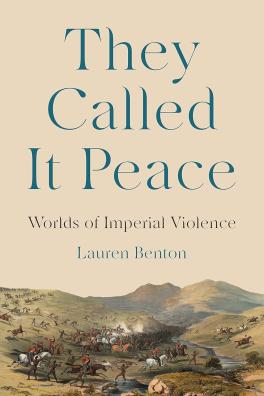
In this book, Lauren Benton shows how European empires built their power by making violence a routine instrument of government, legitimised in the name of peace and order.
Spanning five centuries of history, from Asia to the Americas, she traces how this violence blurred the boundaries between war and peace, to the point of embedding a state of near-permanent conflict at the heart of the contemporary international order.
About the book
In *They Called It Peace. Worlds of Imperial Violence (Princeton University Press, 2024), Lauren Benton traces five centuries of imperial violence, from Asia to the Americas. She shows how European empires shaped a regime of perpetual war, concealed behind the language of peace and order: raids, massacres and campaigns of extermination were labelled as necessary ‘little wars’, presented as humanitarian interventions rather than acts of war.
This masterful book reveals how this legacy continues to shape the contemporary international order — and how imperial violence remains at the heart of the world we inhabit.
About the author
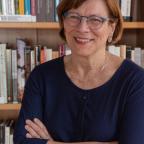
Lauren Benton studied economics at Harvard University before obtaining a PhD in anthropology and history from Johns Hopkins University in 1987. Her early work, focusing on workers in the informal economy, resulted in a book on sweatshops in Spain and a seminal study on the destruction of Afro-Uruguayan neighbourhoods in Montevideo.
Since 2001, she has established herself as one of the leading specialists in global legal history. As the author or co-editor of seven books on European empires, she has focused in particular on issues of sovereignty, conquest, slavery and abolition, war and peace, as well as the history of the international order.
Winner of the 2019 Toynbee Prize, which recognises major contributions to world history, Lauren Benton has taught at MIT, New York University (NYU) and Vanderbilt University. She has also served as president of the American Society for Legal History. She is currently the Barton M. Biggs Professor of History and Law at Yale University.
About the “DÉCRIPT in dialogue” series
The ‘DÉCRIPT in dialogue’ series continues in the spirit of the ‘Livres en dialogue ”, dedicated to works published and distributed by the FMSH, by opening it up to international debate. Each episode, hosted by a journalist, will feature a researcher from the global academic community and one of their major works, with the aim of examining the frameworks that shape our understanding of the world.
About the DÉCRIPT programme
From China’s ‘initiative for a global civilisation’ put forward by China to the ‘civilisation of civilisations’ promoted by Russia, via the US State Department’s call for the ‘search for civilisational allies in Europe’, the reference to the concept of civilisation underpins numerous political discourses and permeates the collective imagination. What worldviews underpin the civilisational narratives put forward by a growing number of international actors? Who articulates them, and what mechanisms govern their production, dissemination or challenge? How do they intertwine with conflictual dynamics and reshape not only the analysis of global issues and models of their governance but also, more broadly, the concept of universal norms?
The DÉCRIPT programme (Framework for the Study of Crises and Civilisational Narratives through a Multidisciplinary and Field-Based Approach), led by INALCO in collaboration with a consortium of fifteen partners and supported by France 2030, aims to shed light on these issues by combining area studies with global studies. Drawing on the humanities, social sciences and data analysis, DÉCRIPT produces original, empirically grounded research. It aims to inform public policy and disseminate its findings widely in order to contribute to a critical understanding of the interactions between civilisational narratives and contemporary crises.