Police, Korean patients and the Public Sphere of Tokyo
Conférence animée par Sarah Terrail Lormel (IFRAE, Inalco), avec les interventions de 2 discutantes : Marianna Scarfone (SAGE, Unistra), Jimin Choi (Fondation D. Kim / Université de Cambridge).
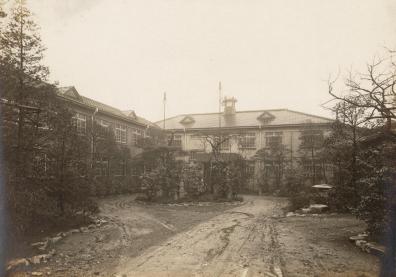
Like many empires in Europe and North America, Japan in the late nineteenth and early twentieth centuries was primarily an East Asian empire, and mental hospitals cared for immigrants from Taiwan and the Korean Peninsula. The problem of mental illness among Korean patients was not created by their bodily constitution, but by the Peace Preservation Law (1925-1945) and the enormous power it granted to the police and Special Higher Police over the Korean immigrants, not only socialist and communist activists. Ohji Brain Hospital had three Korean patients whose problems were clearly more political than medical. In particular, two Korean immigrants who remained at the hospital for about ten years presented many issues faced by Korean immigrants, such as their changing attitudes toward the hospital and Japanese society, their mutual ignorance of each other, and their ideas about Korea.
Contact :
Sarh terrail-Lormel View e-mail