
Stakeholders' Views on Foreign Migrant Workers in Japan's Agriculture
Wirh : Glenda Roberts, professeure émérite à l'Université de Waseda.
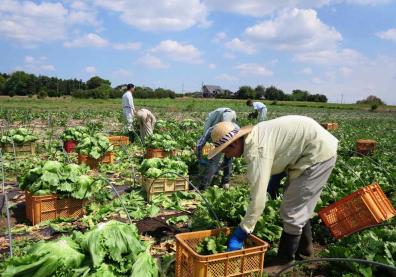
Due to rapid population decline and the aging of its society, Japan, facing serious shortages of labor in many sectors of industry, is now cautiously opening the door to migrant labor. In 2019, under the Abe administration, the Immigration Control and Refugee Recognition Act was revised to welcome foreign workers on the newly created Specified Skilled Worker (SSW) program. Roberts and Fujita conducted research on the farming sector from 2018 to 2024 in Kyoto and Aichi prefectures, to understand these new short-term labor schemes as they are viewed by the stakeholders who implement them on the ground—the farmers, the local officials, and the dispatch companies. This paper will discuss the new short-term labor schemes, highlighting the stakeholders’ viewpoints toward these schemes. What is their hope for foreign workers in their communities? What is the prospect for social integration? Our research points to areas that will need to be addressed before this new form of labor importation can become a sustainable reality.
Organizer : Bernard Thomann (Ifrae) View e-mail