
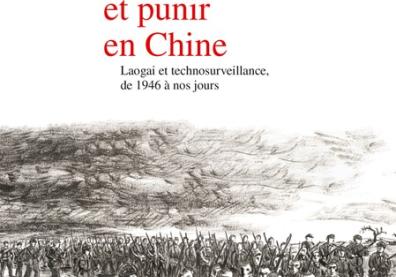
Surveillance and Punishment in China: Laogai and Technological Surveillance, from 1946 to the present day
Panellist: Chloé Froissart
We worked from dawn till dusk, and in the evening we had political education sessions… Everyone vied with one another in their enthusiasm to denounce their fellow prisoners. These meetings were horrific: afterwards, many hanged themselves, poisoned themselves or threw themselves into the river… ”
As terrible as Stalin’s gulag, the laogai – the concentration camp system established by Mao – continues to be used on a large scale in Xi Jinping’s China.
Even before it came to power in 1949, the Party relentlessly persecuted those it accused of being its enemies. In towns and cities, neighbourhood committees intervene as soon as a citizen behaves in an ’abnormal’ manner. ’Class enemies’ and other suspect individuals often end up in the Laogai. Between 1949 and 1976, tens of millions of people passed through them.
But the camps did not disappear upon the death of the Great Helmsman. In the 1980s, young offenders and non-conformists, protesting workers and students, believers and rebellious peasants were sent there. Following Xi Jinping’s accession to power in 2012, the laogai – under a different name – has been used in Xinjiang to turn Uyghurs into “model citizens”. Backed by a large-scale techno-surveillance system, it has remained an essential tool of the Party for eighty years. This book gives a voice to its victims.
Organiser and contact: Chloé Froissart View e-mail