DECRIPT postdoctoral researcher
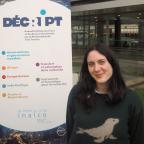
Louise Beaumais, INALCO, affiliated with CESSMA, associated with CERI
Louise Beaumais, holds a Ph.D. in political science (international relations), she has joined the Universalisms and Global Governance research axis. Her work focuses on how knowledge is constructed, legitimized, and disseminated. In recent years, she has focused in particular on the use of figures and data on conflicts by various practitioners (humanitarian workers, journalists, military personnel, and diplomats) in various Western European countries. For her dissertation, titled “On the Use of Numbers in Foreign Policy: From Datafication to Datafiction. Lessons from French and British Arctic Policies,” she focused on legitimate knowledge and its effects on representations in French and British Arctic policies.
Her research project, “Civilizational Discourses and Hierarchies of Forms of Knowledge: Indigenous Peoples’ Knowledge in the Face of the ‘Western Scientific Model’ in UN Institutions,” aims to document the effects of challenges to the modern scientific model. More specifically, she is interested in discourses and practices regarding Indigenous knowledge within four UN institutions: FAO, UNDRR, UNESCO, and UNDP.
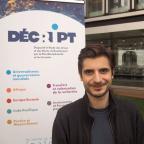
Alexandre Gandil, Université Bordeaux Montaigne, D2iA
A political scientist and sinologist, Alexandre Gandil is a postdoctoral researcher in the Indo-Pacific research axis. Having studied at Sciences Po, INALCO, and Paris 8 University, his research focuses on the processes of universalization, reappropriation, and challenge to the nation-state model, with the Taiwan Strait as his primary area of study. He is the author of "Kinmen, an Archipelago Between Taiwan and China" (Karthala, 2024), a book based on his doctoral thesis.
His research project, titled “State-Civilization and the Westphalian Order: How China Renegotiates the World Order,” examines the role of the People’s Republic of China in the construction, uses, and (non-)circulation of the heuristic category of “state-civilization.” In doing so, he examines the conditions under which Beijing employs the concept of “civilization” by contrasting it with that of “nation,” both in the narrative of China’s historical trajectory and in the structuring of its vision of the world order. In this context, he takes a particular interest in the “Global Civilization Initiative” and the “Taiwan issue.”
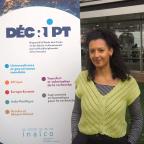
Zoé Quétu, Sciences Po Bordeaux, LAM
Zoé Quétu, a political scientist, is a postdoctoral researcher in the Africa research axis. She studies identity-based political mobilizations and forms of everyday designation. Her dissertation focused on the social struggles of ethnic minorities in Burundi, and her current research examines conservative anti-gender mobilizations.
Her project, titled “On the Margins of Civilization: ‘African Traditions’ and the Exclusion of Gender and Sexual Minorities in Burundi,” is part of the Africa research track at Sciences Po Bordeaux. She analyzes the extent to which civilizational narratives promoting a return to African traditions contribute to the social and political marginalization of gender and sexual minorities, and how the targeted groups reappropriate or subvert these dominant narratives.
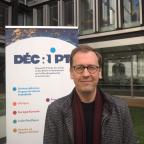
Jan-Markus Vömel, Inalco, CERMOM
Jan-Markus Vömel, a specialist in the history of modern Turkey and Indonesia, global intellectual history, and global religious movements, has joined the Middle East Research axis. He recently earned his Ph.D. from the University of Konstanz on Islamist movements in Turkey, with a dissertation titled “Order and the Renascent Self: The Inner Culture of Turkish Islamism, c. 1950–2000.” He has taught world history and Turkish studies at the universities of Konstanz and Freiburg and conducted postdoctoral research at the BRIN Research Center for Area Studies in Jakarta.
Among his recent publications are “Pathos and Discipline: Islamist Masculinities in Turkey, 1950–2000” (Zeithistorische Forschungen, 3/2021); “Global Intellectual Transfers and the Making of Turkish High Islamism, ca. 1960–1995” (in: Global Intellectual History – The Turkish Connection); “Rowing between the Reefs. Indonesia in the World” (Internationale Politik, Sept./Oct. 2024) and “The AKP and the Muslim Brotherhood: Making and Unmaking an Islamist Alliance in the Middle East and Europe” (Documentation Centre Political Islam, 2025).
His project, “Civilizational Worldmaking in Turkey and Comparative Cases: Islamic Civilizationism, Higher Education, and International Relations,” examines the interplay between “civilization” as an alternative framework for international politics in the Muslim world, the history of civilizational ideas, and the higher education sector based on these ideas in Turkey and the Indo-Malay Archipelago.
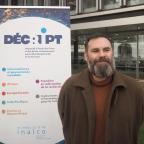
Pierre-Louis Six, ENS-PSL, CIENS
Pierre-Louis Six is a postdoctoral researcher in the Europe-Eurasia research axis. He holds a Ph.D. in history from the European University Institute (EUI) in Florence. His doctoral research, at the intersection of history and political science, focused on the formation of major state bodies dedicated to foreign affairs in the USSR after 1945, on the circulation of knowledge between East and West during the Cold War, and on the transformations of the sciences and forms of government in the USSR and Russia regarding international relations.
He served as deputy director of the Center for Franco-Russian Studies in Moscow (CEFR) from 2017 to 2019. At the Interdisciplinary Center on Strategic Issues (CIENS), he conducted his initial postdoctoral research on uranium in international relations and on the ways in which this natural, toxic, and strategic resource has contributed to altering relations between states and modes of governance within them. He is currently a postdoctoral researcher in the DÉCRIPT program and affiliated with the Maurice Halbwachs Center (CMH) within the DOCSA research track “Data, Behaviors, Knowledge.”
He is conducting a socio-historical study of politics titled “The Scholar or the Politician? Russian and Ukrainian Political Scientists and Concepts of Civilization (1991–2022),” in which he examines how scholars and social science knowledge contribute to the construction of narratives about civilizations in Russia and Ukraine.