
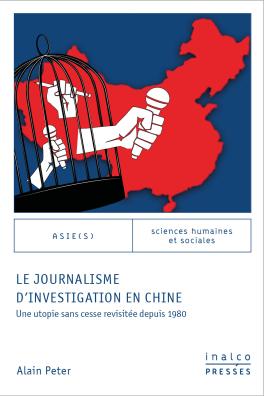
Investigative Journalism in China
A utopia that has been constantly reimagined since 1980
Series : Asie(s)
Subject : Humanities and social sciences
18 €
Présentation
The tainted milk scandal, corruption, industrial disasters: Beginning in the 1980s, Chinese investigative journalists began exposing to the public abuses attributable to government officials.
In a media system controlled by censorship but energized by Deng Xiaoping’s economic reforms, the Communist Party tolerates these investigations because they help it monitor local leaders and correct the most glaring flaws in its own policies. However, journalists are not content with this role and seek to tackle sensitive, nationally significant issues. From the golden age of investigative journalism between 1990 and 2000 to its decline under Xi Jinping’s rule, this book examines the shifting boundaries of journalists’ autonomy. Although controls have tightened since 2012, investigative journalism continues to hold its ground, particularly with the emergence of new digital media in the 2020s.
Drawing on his coverage of numerous cases and interviews with journalists in Beijing, Shanghai, and Guangzhou, the author shows how these journalists, through various strategies, manage to continue their pursuit of the truth.
Author
Alain Peter is a former journalist, he lived in China for several years and returns there regularly. In the early 1990s, he worked for the official news agency Xinhua. Currently a faculty member and researcher at the University Center for Journalism Education (CUEJ) at the University of Strasbourg and an associate member of the SAGE research laboratory (UMR 7363), he studies the media and the practice of journalism in China. His doctoral dissertation focused on the production and editing of news photographs at the Shanghai-based newspaper Dongfang Zaobao.
214 pages
16 x 24 cm
Publication : 22/10/2026
ISBN : 9782858314928