DECRIPT Ph.D. Students
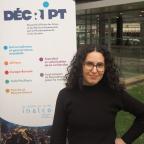
Laura Darenne
Laura Darenne is a Ph.D. student in the “Research Tools and Training” research axis. She holds a bachelor’s degree in Chinese (LLCER) and a master’s degree in Natural Language Processing from INALCO, and specializes in analyzing user behavior on social media by analyzing their posts. She is currently working on her dissertation at INALCO, focused on the linguistic modeling of narratives, under the supervision of Mathieu Valette, a professor of language sciences in the ER-TIM (INALCO).
Her thesis project at INALCO is titled “Linguistic Modeling and Typology of Influential Narratives on Social Media: A Theoretical and Applied Contribution to Automatic Detection and Monitoring.” The aim is to linguistically characterize and model narratives for the purpose of identifying them and to build a processing chain for automating the detection, analysis, and visualization process within the DÉCRIPT program.
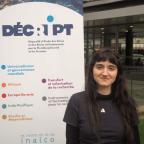
Aurore Sailhac
Aurore Sailhac is a Ph.D. student in the DÉCRIPT program within the “Universalisms and Global Governance” research axis. An international lawyer who earned her Master’s degree in Public International Law from Paris-Panthéon-Assas University, she places particular emphasis on interdisciplinarity by adopting a legal approach that incorporates the social sciences. She has a specific interest in the links between colonial history and the development of international law, as well as the decolonization issues that arise from them. Her previous work has addressed these questions through the study of indigenous peoples’ rights and the right to self-determination.
Her thesis project at Paris-Panthéon-Assas University focuses on “The Colonial Legacy of International Law.” Her research examines the traces of colonialism in international law, in its norms, institutions, and doctrinal currents. She explores what remains today of the colonial legacy that historically shaped the formation of classical concepts of international law and how it persists in positive international law. By studying the legal norms that have structured civilizational narratives, particularly the notion of the “civilizing mission” used to justify colonization, her research aims to propose a legal framework that sheds light on the connection between this colonial legacy, critiques of the universalism of international law, and the perpetuation of civilizational narratives within the international order.

Eleanor Hart
Eleanor Hart is a Ph.D. student in the DÉCRIPT program at INALCO, specializing in the Indo-Pacific Axis. After several years of activism alongside the Uyghur diaspora in Paris, she began a dissertation on the history of East Turkestan/Xinjiang. She focuses in particular on the occupation and annexation of East Turkestan/Xinjiang and how this history has been written and interpreted by various actors over time.
Her dissertation project at INALCO is titled “Peaceful Liberation 和平解放: A Political and Historiographical Concept Fueling a Civilizational Narrative in Opposition to European Imperialism.” Her research focuses on the occupation and annexation of East Turkestan/Xinjiang, the narratives surrounding these events, and the resulting sovereignty issues.

TBA
TBA

TBA
TBA
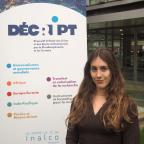
Jeanne Paul-Roth
Jeanne Paul-Roth is a Ph.D. student in the DÉCRIPT program within the Europe-Eurasia research axis. Holding a bachelor’s degree in Russian language and civilization and a bachelor’s degree in history, she went on to specialize in the analysis of conflict dynamics related to the exploitation of mineral resources in Europe and Central Asia as part of her master’s research at the French Institute of Geopolitics. She is now preparing a dissertation at INALCO on mining extractivism in Kazakhstan since the collapse of the USSR, adopting an approach that combines a spatialized history of the very contemporary with a geopolitical methodology, under the supervision of Laurent Coumel, a historian at CREE (INALCO), and Amaël Cattaruzza, a geographer at the IFG Lab and a member of GEODE (University of Paris 8).
Her thesis project, “When Civilizational Narratives Support Mining Extractivism: Political-Economic Rivalries and the Ecological Crisis in Kazakhstan (1991–2025) ” analyzes the geohistorical trajectories of Kazakhstan’s mining territories and their socio-environmental controversies since 1991, a period marking both the collapse of the USSR and the fall of the Soviet modernity paradigm. In this context, extractive issues appear to be closely linked to a renewal of discourses on progress and modernity—themselves strongly influenced by the lingering effects, or even contemporary revivals, of the “civilizational standard”—whose implications must be understood within the context of multiple crises—economic, industrial, ecological, and demographic—in post-Soviet mining regions. From the local to the transnational, his research aims to analyze these discourses and the strategies of the actors underpinning them, to identify their spatial dynamics as well as the legacies within which they are embedded, while paying attention to the crises they fuel and from which they draw sustenance (whether these be protest movements or resource shortages).