
The Armenian massacres and genocide as seen through contemporary Czech sources: rediscovering lost memories
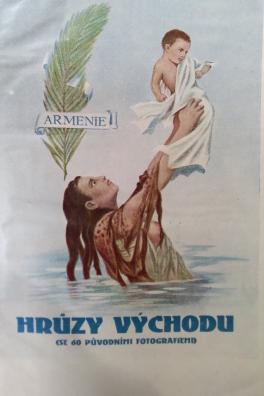
The Armenian massacres and genocide as seen through contemporary Czech sources: rediscovering lost memories
This article examines the accounts of two Czech travellers in the Ottoman Empire, covering the period from the 1880s to 1923. Whilst the first document took the form of letters describing a ‘voyage of discovery’ to the sources of the Tigris and Euphrates by Josef Wünsch, an amateur geologist and scholar of the National Revival, the second primary source, written by Vlasta Kálalová-di Lotti, was intended for publication but was ultimately never published. These two sources constitute an important contribution to human geography, with a focus on studies of trauma in the context of the Armenian massacres (1890s) and the Armenian Genocide. As first-hand accounts, these sources represent a testimony to the times.
Speaker
Dr Petra Košťálová, Ph.D.
Department of Ethnology, Central European Studies and Balkan Studies, Charles University, Faculty of Arts (nám. Jana Palacha 1/2, 116 38 Prague 1, Czech Republic)
Doc. Petra Košťálová, Ph.D., holds a degree in Armenian Studies and Ethnology (Charles University, Prague). She currently works as an assistant professor in the Department of Eastern European Studies (Charles University). Her research focuses on ethnicity, stereotypes and collective memory, with a particular emphasis on the Caucasus region (specifically Armenian history, literature and culture). Her work centres on the textual analysis of Armenian primary sources dating from the 16th to the 18th centuries (chronicles, colophons and travel accounts).
