Filming from the margins: narratives, representations and forms of subversion in 21st century Tamil cinema
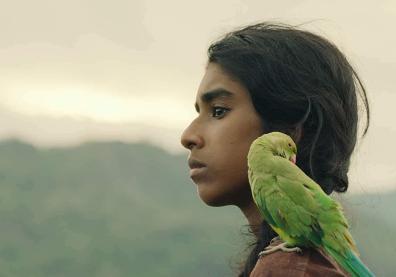
Tamil cinema is now one of India's most dynamic film industries. Indeed, although historically marked by the figure of the mass hero, the codes of the masala movie or an interweaving of cinema and politics, Tamil films have been undergoing a profound transformation in form and substance over the past two decades, embracing renewed aesthetics, narratives and representations.
This new wave of Tamil cinema is less concerned with showing the unity of a Tamil nation called for by "Dravidian" ideology than with revealing a Tamil society fragmented by patriarchal oppression, social inequality and the violence of casteism. These films give voice to the voiceless, the oppressed, characters marginalized by their caste, gender, religion, social status or sexual orientation. They decentralize the gaze and reveal viewpoints hitherto invisible in Tamil cinema. These works, which are defined by narrative and formal experimentation, are produced by filmmakers who have won wide recognition as the leading figures of "anti-caste cinema", Pa. Ranjith, Mari Selvaraj or Vetrimaran, or emerging independent filmmakers such as P.S. Vinothraj or Leena Manimekalai. Finally, beyond filmic works, this new wave of Tamil cinema not only questions forms of censorship, but also upends production and reception practices in Tamil Nadu and the diaspora.
This fourth Tamil Studies Day is therefore intended as a ground for multidisciplinary exchange on the issue of marginalized people in 21st-century Tamil cinema. What alternative representations and discourses does this cinema offer on marginalized people in a fragmented Tamil society? In what ways are these films an eminently political space for subversion and resistance? What are the production and reception issues behind this new wave of Tamil cinema?
Program
- 9am-9:30am, opening and introduction: VELUPPILLAI Uthaya and ZAMBOULINGAME Shakila
Panel 1. Narratives and aesthetics of subversion
Moderation: ROBIN Françoise (IFRAE, Inalco)
- 9:30-10am: ESWARAN Swarnavel (Michigan State University) "Redefining the Margins: Anti-Caste Narratives in the Cinema of Pa. Ranjith and Mari Selvaraj"
- 10-10:30am: VELUPPILLAI Uthaya (CESSMA, Inalco) "À la recherche d'une esthétique subversive au pays tamoul : l'adaptation de la littérature au cinéma"
Coffee break
Moderation : HEADLEY Zoé (CESAH, CNRS)
- 11:10am-11:40am: LEONARD Dickens (Indian Institute of Technology, Delhi) "Caste Humiliation, Cinematic Experience and the Question of Genre in Tamil Cinema"
- 11:40am-12:10pm: ZAMBOULINGAME Shakila (CESAH, Université de Montpellier Paul-Valéry) "Thangalaan: forms of the subversion of a postcolonial epic paraiyar"
- 12:30-1pm: Guest speaker: BASKARAN Theodore "The Emergence of Star Politician in Tamil Nadu"
Lunch break
Panel 2. Figures (in)visibilisées et émancipations
Moderation : GESTIN Martine (Inalco)
- 2:30-3pm : SAVERIMUTTU Meenaatchi (Cardiff University) "From New Wave to Netflix: Queer Representations in Paava Kadhaigal (2020) and Sweet Kaaram Coffee (2023)"
- 3-3.30pm : B. Geetha (Manipal Academy of Higher Education, Bengaluru) "The Comic Misfit in Mandela: Between Caste and Comedy in Tamil Cinema"
- 3:30pm-4pm: EDACHIRA Manju (Brandeis University): "Intermedial Interventions: Emancipatory Mediations in Pa. Ranjith's Films"
Coffee Break
Panel 3. Documenting and contesting: cinema through the prism of social and political realities
Moderated by VARREL Aurélie (CESAH, CNRS) and ARABINDOO Pushpa (University College London)
- 4:30pm-5pm: DEVADAS Vijay (Auckland University of Technology) and VELAYUTHAM Selvaraj (Macquarie University) "Contested Infrastructures: Aesthetic of Assertion in Contemporary Tamil Dalit Cinema"
- 5-5.30pm: KUMAR A. Deivendra (University of Hyderabad) : " Contemporary Tamil Cinema and 'Casteed' Reception in Southern Tamil Nadu"
- 5:30-6pm : GORRINGE Hugo (The University of Edinburgh) et DAMODARAN Karthikeyan (National Law School of India University, Bengaluru) " Caste, Cinema and the Civil Sphere: Scripting Social Change in South India"
6:30-7pm : Table ronde - professionnel(le)s du cinéma.
- "Independent Tamil cinema: state of play and prospects"
Conclusion: VELUPPILLAI Uthaya and ZAMBOULINGAME Shakila
Find the program for the other two days in the attached document.