Revisiting the Shāhnāma demons: narrative and pictorial patterns relating to the dīv in the Shāhnāma manuscript tradition
With Prof. Gabrielle van den BERG, Leiden University
Revisiting the Shāhnāma demons: narrative and pictorial patterns concerning the dīv in the Shāhnāma manuscript tradition
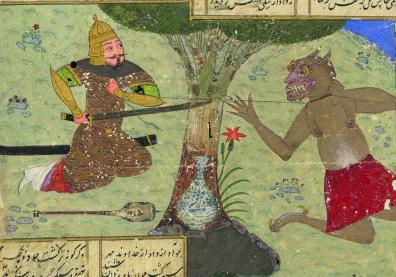
Demons (dīvs) in various guises and roles play an important part in the Shāhnāma, particularly in the episodes dealing with the adventures of the hero Rustam. The encounter between the White Dīv and Rustam, which marks the climax of Rustam’s Seven Trials, is one of the most famous stories in the Shāhnāma. The pictorial cycle of illustrated Shāhnāma manuscripts almost invariably includes a painting of the recognisable scene in which Rustam slays the White Dīv in order to free the reckless King Kāvus. In this lecture, the role and depiction of demons in the Shāhnāma and in the Shāhnāma manuscript tradition will be discussed in relation to the appearance of demons and their offspring in so-called secondary or later epics, specifically as featured in the story of the son of the White Dīv, Shabrang, composed as a sequel to the Haft Khvān or Seven Trials of Rustam. This story appears as a rare interpolation in a number of Shāhnāma manuscripts and in a unique manuscript copy known as Shabrangnāma, preserved at Leiden University Library.