From Taiwanese pòo-tē-hì to contemporary French puppetry: circulations, translations and dramaturgies of play
As part of the "Transforming / translating Taiwan" lecture series organized by Inalco's Chaire d'études taïwanaises, this meeting aims to question the ways in which the Taiwanese experience can be transformed, translated and reinvested in contemporary artistic creation.
The cycle conceives of Taiwan not just as an object of study or representation, but as a space for the production of forms, narratives and knowledge, capable of nurturing transnational dialogues and renewing frameworks of thought on memory, identity and artistic practices.
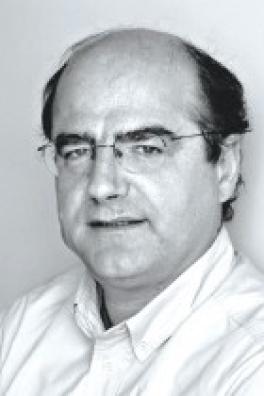
Founder and director of Théâtre Sans Toit in 1977, Pierre Blaise is one of the leading figures in contemporary puppet theater in France. Initially oriented towards street theater and mask work, he soon developed a visual art based on the dramaturgy of play and stage presence.
His decisive encounter with Taiwanese puppet master Li Tien-lu (李天祿), through the Théâtre du Petit Miroir, marked a disicive discovery in his career. This encounter led him to turn to puppet theater, and to think about adapting the Taiwanese girdle puppet (pòo-tē-hì 布袋戲) - thought of as a "miniature actor" - to Western traditions. This work of adaptation opens the way to a form of puppetry with realistic play, notably visible in creations such as Le Roman de Renart.
Engaged at the Théâtre National de Chaillot under the direction of Antoine Vitez, Pierre Blaise participates in a generation of puppeteers who have profoundly renewed the French stage. He has created more than twenty-five shows at the Théâtre Sans Toit, inspired by pictorial or textual themes, and has been a major teacher (École Charles Dullin, ENSATT, Théâtre National de Chaillot, ESNAM de Charleville-Mézières). From 2014 to 2025, he was director and then educational director of the Théâtre aux Mains Nues.
Based on his discovery of and dialogue with Taiwanese pòo-tē-hì, Pierre Blaise will propose a reflection on how this encounter gradually transformed his practices of puppet creation. The aim will be less to compare two traditions than to understand how know-how learned elsewhere has been assimilated, displaced and reinvested in a different artistic context.
His talk will highlight the transformations operated at several levels:
-
on the practical level, through learning gesture, manipulation and the physical relationship between the puppeteer's body and the puppet ;
-
on the dramaturgical plane, through a conception of acting in which the puppet becomes a true actor, capable of carrying a stage presence and expressiveness of its own ;
-
on the conceptual plane, by rethinking the puppet not as a mere animated object, but as a theatrical instrument in its own right, endowed with an autonomy of play ;
-
on the cultural plane, finally, through a careful work of adaptation, which transforms the contributions of pòo-tē-hì without freezing them in an exoticizing reproduction.
This reflection is part of a concrete history of artistic exchanges between Taiwan and France. The workshops and demonstrations led in Paris in the 1980s by master Li Tien-lu were a key moment of transmission, offering French artists direct access to the principles of pòo-tē-hì. For Pierre Blaise, this encounter opened up a research space where the Taiwanese experience becomes a lever of creation, rather than a model to be imitated.
The talk will thus raise several fundamental questions:
-
Where is the boundary between adaptation, appropriation and creation in puppetry work?
-
How can we think of puppetry as a place of intercultural dialogue, rather than simply as a heritage object?
-
How have exchanges with Taiwan contributed to lastingly transforming the contemporary French puppetry scene, both in its forms and modes of thought?
-
The prospect of extending this link with pòo-tē-hì
ORGANIZATION
Chanyueh Liu