
The transformation of Buddhism in China’s ‘new era’
Registration required.
Featuring: Ji Zhe (Ifrae)
Discussant: Daniela Campo (Ifrae)
Book summary:
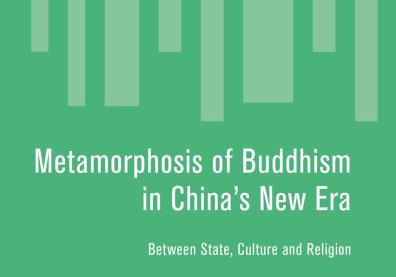
This book analyses the profound transformations in the Chinese Buddhist landscape at the beginning of the 21st century, against a backdrop marked by the growing assertion of the People’s Republic of China’s economic and political power on the world stage. Since the mid-2000s, new forms of Buddhism have been developing under the banner of ‘traditional Chinese culture’ (中國傳統文化), profoundly altering the ways in which Buddhism is practised, represented and embedded in the public sphere.
These unprecedented configurations are taking shape within the scope for manoeuvre created by the state’s redefinition of the categories of ‘religion’ and ‘culture’. Following the crackdown on Falun Gong in 1999, the Chinese Communist Party gradually shifted its policy towards popular beliefs, moving from a strategy of suppression to one of integration and co-optation. Now valued as components of ‘traditional Chinese culture’, these beliefs have been re-inscribed within a broader cultural framework with which Buddhism is also associated. However, the Party’s aim is not to promote Buddhism as a religious belief. Rather, the aim is to harness its cultural and symbolic resources to foster national cohesion in a society that has become more prosperous, whilst making Buddhism one of the cultural vehicles supporting China’s international assertiveness. The book proposes to describe these new configurations as ‘metamorphoses’. These signalled the entry of Chinese Buddhism into a new phase of its history, distinct from the modern reformist Buddhism that emerged at the beginning of the 20th century, and characterised by an unprecedented repositioning in its relations with the state, society and culture.
Based on field research, each chapter highlights the local actors who are developing new beliefs, practices and forms of organisation within emerging spaces and networks. Particular attention is paid to the ways in which these actors negotiate, engage with and transform the institutional categories of ‘religion’ and ‘culture’. The study focuses primarily on the forms of Buddhism practised amongst the Han Chinese, whilst examining the circulations and interactions between the Mahāyāna, Theravāda and Vajrayāna traditions, as well as their multiple connections with popular beliefs.
Wank David L., Ashiwa Yoshiko, and Ji Zhe (eds.). 2025. Metamorphosis of Buddhism in China’s New Era: Between State, Culture, and Religion, London: Bloomsbury Academic, 285 pp.
Organiser: Justine Rochot (CNRS/Ifrae) View e-mail