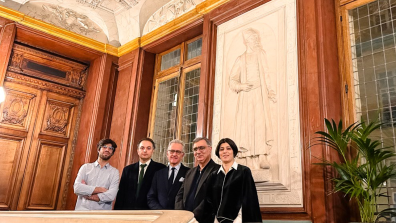
A look back at the screening of Mohammad Ehsani's documentary "Balouch Voices".
Visiting Europe, Iranian director Mohammad Ehsani presented his documentary Balouch Voices, accompanied by lectures on the region's history, people and cultural traditions.
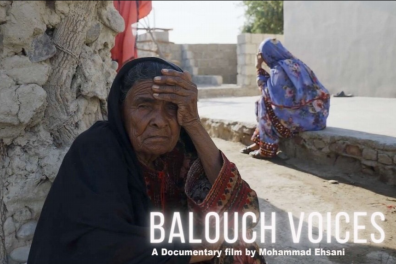
A documentary on music and cultural practices in Baluchistan
The film traces the journey of Shemshouk, the iconic Afro-Iranian singer nicknamed "the voice of Baluchistan", a region in southeastern Iran. Descended from a lineage of African slaves, Shemshouk embodies both the richness and resilience of a culture marked by struggles for freedom. In particular, she has dedicated herself to collecting and safeguarding regional lullabies, now threatened with extinction.
Historical and anthropological perspectives on Afro-Iranian populations
A number of speakers then complemented the film's themes.
Leila Koochakzadeh, professor of Iranian history-geography and Persian language at Inalco, offered a presentation devoted to the history of African presences in Iran. She evoked the historical processes linked to slavery and forced immigration, as well as certain representations associated with these populations in historiography.
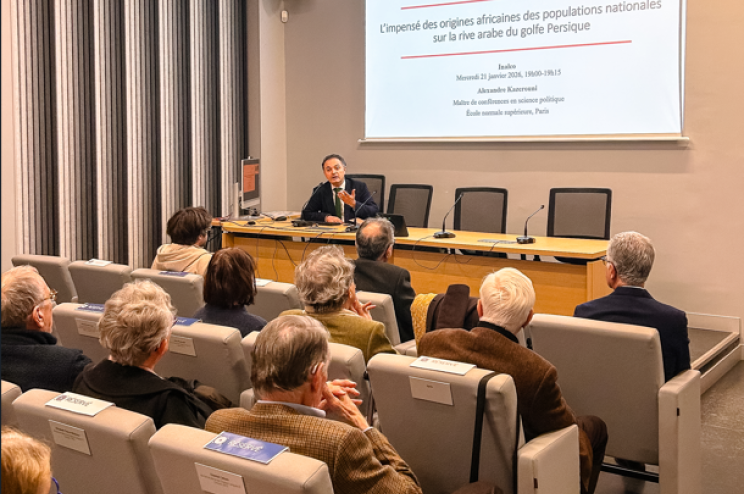
Following the screening, Alexandre Kazerouni, researcher and lecturer at the École normale supérieure, presented a lecture entitled "L'impensé des origines africaines des populations nationales sur la rive arabe du golfe Persique". His talk focused on representations of Gulf populations in museum spaces, in particular through the analysis of mannequins on display, and the way in which certain physical characteristics are highlighted or dismissed.
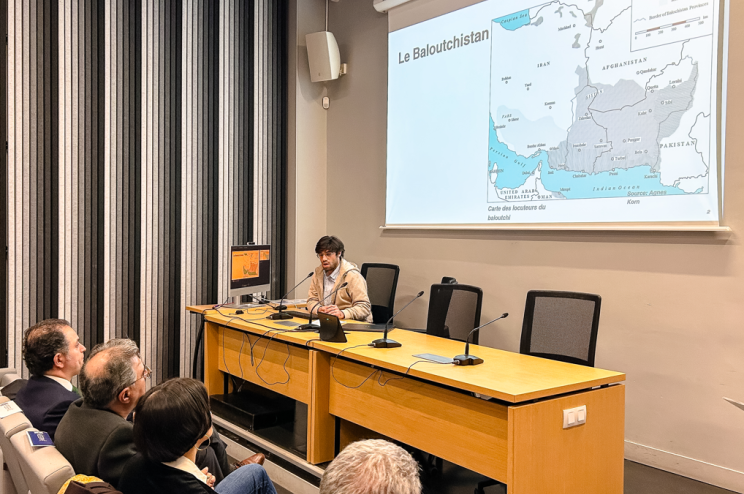
Finally, Romain Mascagni, a doctoral student at Inalco, presented his research work in a lecture entitled "Music at the heart of the ritual deployment of damâl in Muscat (Sultanate of Oman)", focusing on Baluchi healing rituals. He revisited Baluch beliefs and practices aimed at curing ills through forms of musical exorcism, drawing on observations from his field surveys.
The Inalco Foundation warmly thanks Mr. Mohammad Ehsani for his visit and his testimony, as well as Leila Koochakzadeh, Alexandre Kazerouni and Romain Mascagni for their contributions. It also thanks all the participants who attended the projection-conferences.