A PhD student and an alumnus of INALCO have been awarded the 2026 Louis Dumont Fund (FMSH)

Since 1988, the Louis Dumont Fund has been offering temporary funding specifically for social anthropology fieldwork projects, prioritising the collection of descriptive material aimed at developing a monographic perspective.

Kahina Guillard is a PhD student in anthropology at INALCO. She is affiliated with CERMOM, CESSMA and the French Institute for the Near East (IFPO). Her research focuses on the strategies of concealment and avoidance used to counter racial violence adopted by minorities considered to be Roma, the Doms, in Iraqi Kurdistan and subsequently in Jordan. In 2025, she was awarded a special mention in the Michel Seurat Prize. In 2026, her thesis project entitled ‘Escaping the Gaze: Anti-racist Lessons Learnt from the Doms on the Syrian-Jordanian Border’ was awarded the Louis Dumont Prize.
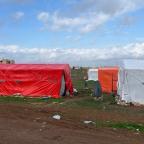
Escaping the gaze. Anti-racist lessons learnt from the Doms on the Syrian-Jordanian border
This project analyses the processes of racialisation affecting the Doms Mansour, a Romani group living on the Syrian-Jordanian border, as well as the strategies they have developed to cope with anti-Romani violence. Drawing on a fifteen-month ethnographic study conducted in Jordan between 2024 and 2025, the project examines how long-standing, inherited representations shape contemporary social relations and give rise to a continuum of racial violence. Find out more

After completing a bachelor’s degree in Tibetan at the National Institute of Oriental Languages and Civilisations (Inalco), Leyou LI is currently pursuing a Master’s degree in Asian Studies at the École pratique des hautes études (EPHE). His research dissertation focuses on the worship of a category of nature spirits known as ‘klu’ in the Tibetan world, with particular attention paid to the domestic rituals associated with them. Since 2022, he has undertaken annual study visits and fieldwork in Tibetan regions, endeavouring to combine philological and anthropological approaches in order to explore the system of invisible powers and Tibetan cosmology.
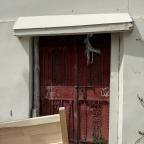
A study of domestic rituals involving klu (water spirits) in Central Tibet
In the Tibetan world, natural spirits known as ‘klu ’ dwell in subterranean or aquatic environments, govern natural resources and are intimately linked to both the prosperity and the misfortunes of human beings. Whether in everyday practices or classical religious texts, the klu occupy an important place; yet previous research has mainly focused on textual exegesis and collective rituals, neglecting domestic rituals, which are nonetheless just as prevalent.
Drawing on ongoing fieldwork in Central Tibet, this research has a twofold objective: to document these domestic practices, which are threatened with extinction by urbanisation and collective resettlements; and, by incorporating the specific characteristics of these domestic rituals into the analysis, to propose a new anthropological interpretation of the figure of the klu. By combining field research with textual studies, this study aims to move beyond the cultural materialist approach in order to understand the cosmological significance of the klu and, more broadly, the Tibetan system of natural deities. Find out more